

06/03/2026

What is the ideal age for children to learn English?

Πότε είναι η ιδανική ηλικία για την εκμάθηση αγγλικών για παιδιά;

What is the ideal age for children to learn English?

The "Golden Period" of language development, the right methodology by age, and why early learning makes a difference

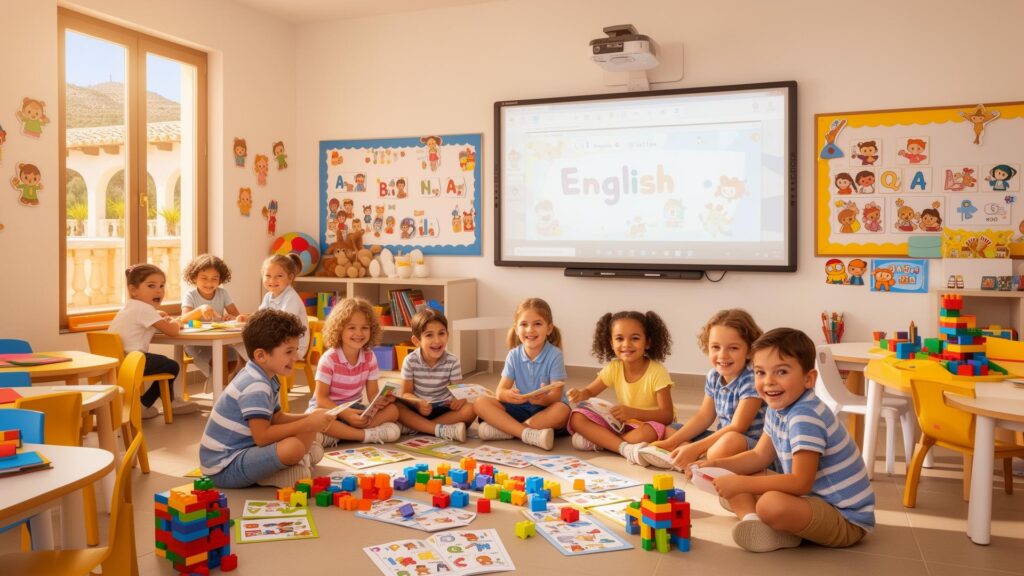
The ideal age to start learning English for children is considered to be preschool and the first school age (4 to 7 years). At this stage, the brain exhibits maximum "plasticity," allowing for the absorption of foreign sounds and structures in a natural way, similar to the mother tongue.

The question "when should my child start English?" is one of the biggest concerns of every modern parent. In a society where multilingualism is no longer a skill but a prerequisite, the right timing can determine not only whether the child will earn a degree but whether they will love the process of learning for the rest of their life.

The "Golden Period" of Language Development

According to the "Critical Period Hypothesis," there is a specific window of opportunity in human development where acquiring a language happens effortlessly.
  • Before the age of 7: Children use the same part of the brain for their mother tongue and second language - they acquire native speaker-level pronunciation.
  • Ages 8–12: Learning remains rapid, but the brain processes more analytically. An ideal period for writing and grammar.
  • After puberty: Learning becomes more conscious. Although possible, it requires more time and effort.
Πότε είναι η ιδανική ηλικία για την εκμάθηση αγγλικών για παιδιά;

The Benefits of Early Learning

Cognitive Development

Bilingual children show better problem-solving skills, greater creativity, and enhanced critical thinking.

Cultural Empathy

Exposure to a foreign language opens a window to other cultures, fostering acceptance and diversity.

Self-confidence

When a child sees that they can communicate in new ways, they feel more capable of facing new challenges.

What Should the Lesson Look Like at Every Age?

Ages 4–6

Preschool Age: Learning through Play

  • Fairy Tales and Storytelling
  • Songs and Rhythm (Phonics)
  • Movement Games (Total Physical Response)
  • Crafts with instructions in English
7–9 years old

Early Primary Classes: Exploration

  • Language Visualization (Flashcards, video)
  • Dialogues through role-playing games
  • Connecting language with everyday life
10–12 years old

Pre-Adolescence: Certification Foundations

  • Understanding language structure
  • Development of written expression
  • Preparation for first exams
english kids preteen CXgt1Nsz

Why The English School in Orestiada?

In Orestiada, we understand that parents seek the best for their children. At The English School →, learning English for children is a pleasant experience for the student and a reassurance for the parent.

The Ideal Age is 'Their' Age

Although science favors younger ages, the ideal moment for learning English is when the child feels ready to explore a new world. At The English School, our goal is not to pressure children, but to give them the keys to unlock their potential.

In Orestiada, we are proud to raise generations of children who speak English with confidence and a smile.

english kids reading DuwB2C4A

Frequently Asked Questions by Parents

1. Will they get confused with the Greek in 1st grade?

Research shows the opposite. Learning a second language helps the child better understand the structure of their mother tongue. Their brain learns to separate the two systems with remarkable ease.


You don't need to teach the child yourself. However, you can encourage them by listening to songs together or watching cartoons in English. Your positive attitude is the biggest motivation.

No, as long as the lesson is tailored. At this age, the child doesn't learn grammar, but "absorbs" sounds. It's the best investment to ensure they never have a problem with their pronunciation.


Do you want your child to love English?

Visit us at The English School in Orestiada or go to theenglishschool.gr

Contact Form

Do you have any questions or concerns? Fill out the form and we will respond immediately!

Share on social media:
Facebook
Χ (Twitter)
LinkedIn