

How can I tell if my child is struggling with English?
The signs worth noticing, the most common causes and what you can do at home and together with the teacher.
Book an introduction and level assessment →A child who is struggling with English usually shows it through avoiding homework, falling marks, anxiety before lessons or phrases such as "I don't understand anything". If the signs keep coming back for several weeks, the first step is a calm talk with your child and letting the teacher know, so that the exact gap can be identified.
Every child has good weeks and bad weeks. A demanding unit or one low test mark does not necessarily mean there is a problem. When the same signs appear again and again, however, it is worth looking at what is going on before the gap grows and your child loses interest in the lessons.
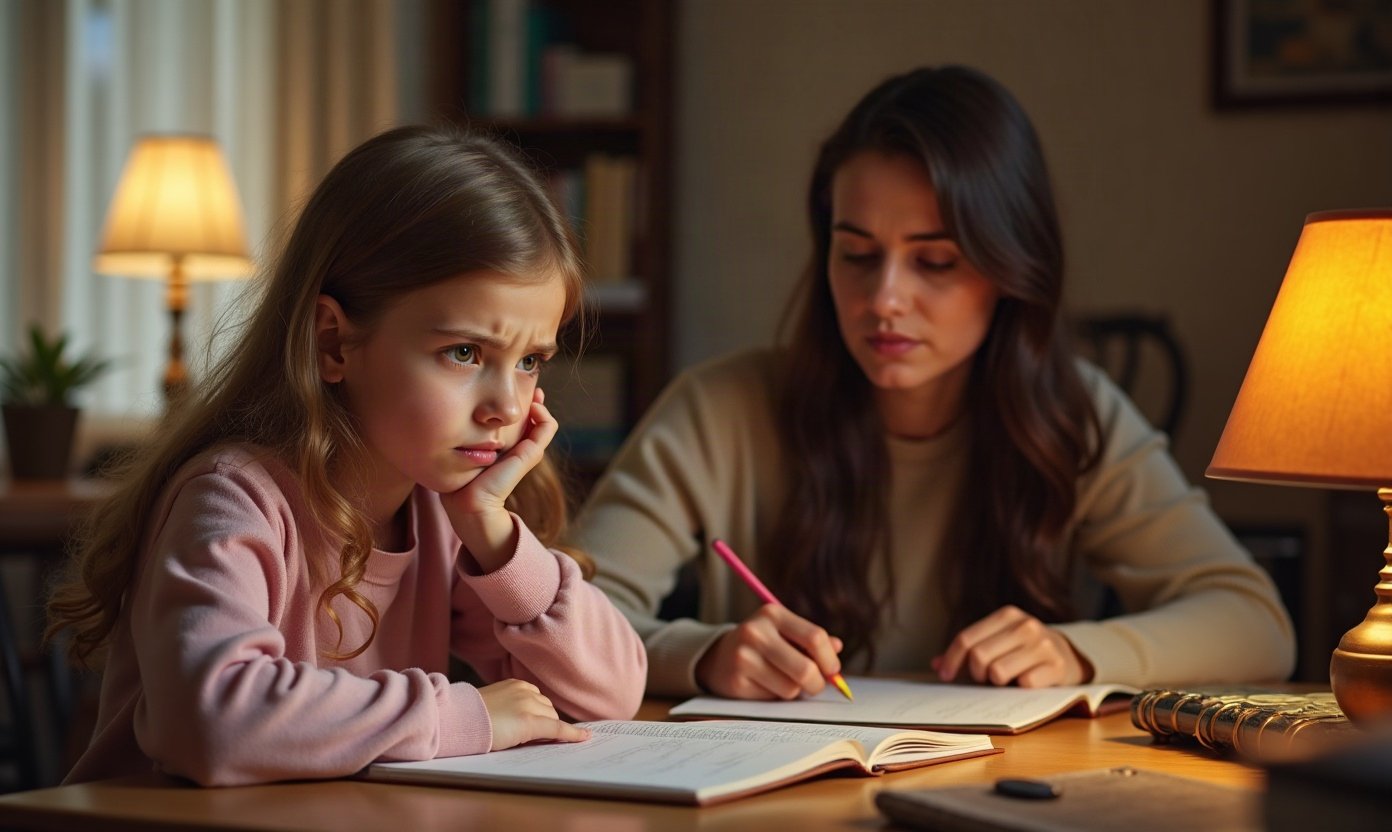
The signs worth noticing
Avoids homework
Leaves it until last, rushes through it or says there was none.
Marks are dropping
Lower results in tests or at school that cannot be explained by one bad day.
Gets anxious before lessons
Complaints or low mood just before leaving for the language school.
Does not speak in English
Avoids answering out loud, even to simple questions.
Forgets what was learnt
Cannot remember words and rules they knew the week before.
"It's boring"
A lack of interest can hide a difficulty, or material that is too easy for their level.
Why your child may be struggling
| Possible cause | What you notice | What helps |
|---|---|---|
| Gaps in the basics | Struggles with material that builds on earlier units | Revising those specific points in agreement with the teacher |
| A level that does not suit them | Finds the lessons too difficult or too easy | A talk with the teacher about whether the class matches their level |
| Absences | Gaps after illness or a break | Catching up on the material that was missed |
| Little contact with the language | Understands in class but does not remember afterwards | More English in everyday life, through videos and cartoons |
| Tiredness and workload | Finds it hard to concentrate | Better organisation of the weekly schedule |
If the difficulties also appear in Greek, for example in reading or spelling, discuss it with the school teacher as well. They can refer you for an assessment by a specialist if needed.

What you can do at home
- Talk calmly with your childAsk what exactly they find difficult, without comparing them to siblings or classmates.
- Let the teacher knowTell the teacher if your child finds the lessons too difficult or too easy. A child who does not want to draw attention may never say so in class.
- Check the preparation, not the contentYou do not need to teach. It is enough to make sure the homework is done and the books and notebooks are in the school bag.
- Increase contact with the languageEducational videos and episodes of their favourite cartoons in English, and later series and films.
English for children and teenagers
Small classes from Pre-Junior to Proficiency, where the teacher follows each child's progress and spots difficulties early.
See the classes for children →
Support within the class
At The English School classes are small, so that the teacher can follow each child individually, spot difficulties early and adapt the teaching. When a student is struggling, supplementary lessons are available so that they can better organise what they have learnt and practise the points they find difficult.
If your child has to miss a lesson, they can join it online from a computer, tablet or mobile phone, and the teacher makes sure any gaps are covered. If you are considering private lessons, first read the comparison private English lessons or a language school.
Read also
Frequently Asked Questions
How do I know if my child is struggling with English?
What should I do if my child is doing poorly in English?
Can I help my child if I don't speak English?
Does a struggling child need private lessons?
When should I talk to the teacher?
Could my child be bored because the lessons are too easy?
Tell us about your child
Tell us what you notice and together we will see where the difficulty lies and how it can be addressed.
Contact & Registrations →- 📍 Ethnomartiron 127, Orestiada 682 00
- 📞 2552 0 23096 / 697 693 4122
- 🕒 Monday - Friday 14:30-22:00, Saturday 10:00-12:30
Contact us
Fill in the form and we will arrange an introductory meeting and a level assessment for your child.