

Online or In-Person English for Kids - Which is Better?
Concentration, interaction, consistency, and final outcome – what each option gains and loses.
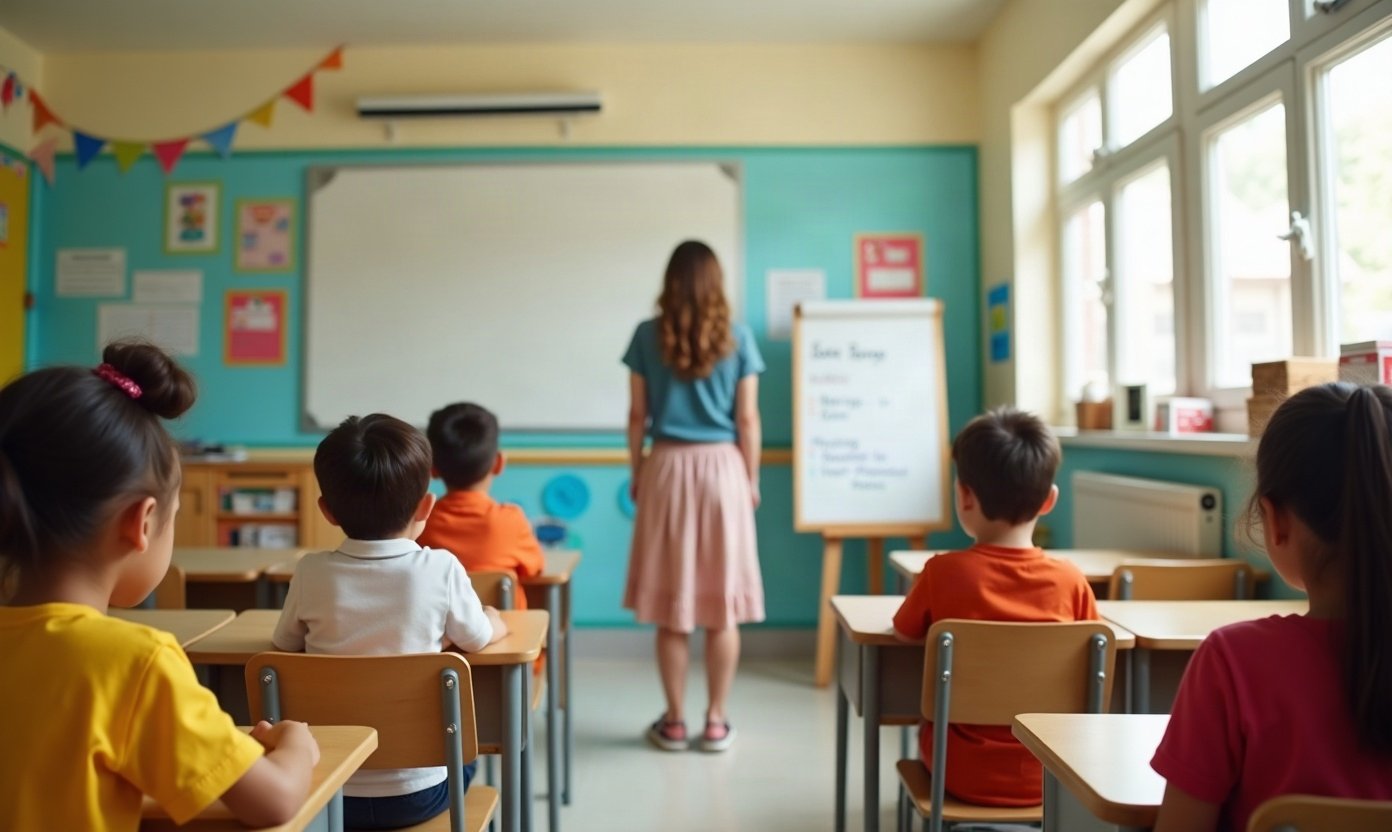
For younger children, the in-person lesson usually provides the strongest foundation, as concentration and interaction with the teacher and classmates come more naturally. The online lesson is a real solution when commuting is difficult or when flexibility is needed – and works excellently as a supplement, so the child does not miss material during absences.
The question arises in almost every registration. And the answer is rarely absolute: it depends on the child's age, how easily they concentrate, and the family's daily routine. See what really changes between the two options, without exaggeration in either direction.
What changes practically
| Criterion | In-person | Online |
|---|---|---|
| Concentration | Easier - the class 'holds' the child | Requires a quiet space and fewer distractions |
| Interaction | Immediate, with eye contact and body language | Live but through a screen |
| Commuting | Takes time from the family | No movement |
| Flexibility | Fixed class schedule | Covers absences and difficult days |
| Fits in | Younger ages, children who need structure | Older children, distance, busy schedule |
When online works very well
When there is distance
For families outside Orestiada, movement ceases to be an obstacle.
In absence
The child attends from a computer, tablet, or mobile and does not fall behind in the material.
In a busy year
When the school schedule and activities press in the afternoon.
In older ages
Teenagers manage the autonomy that online requires more easily.
English for children and teenagers
Small classes from Pre-Junior to Proficiency, in-person and online, with a method adapted to age and level.
See English for Kids →What to watch out for if you choose online
- Live lesson, not videosThe child must participate in real-time with the teacher and classmates, not passively watch.
- Quiet, stable spaceA table without a television and mobile phones next to it radically changes performance.
- Camera onEye contact keeps attention and allows the teacher to see if the child is lost.
- Same ritual as in-personSame time, ready books, no food and breaks in between.
Read also
Frequently Asked Questions
Online or in-person English for children - which is better?
Is the online class live or recorded?
From what age does online learning make sense?
If the child misses a class, what happens?
Does the child lose out on speaking skills if they do online?
Is the child preparing for certificates in both ways?
See what suits your child.
Close a level assessment and we will recommend a section and course format based on age, level, and family schedule.
Contact & Registrations →- 📍 Ethnomartiron 127, Orestiada 682 00
- 📞 2552 0 23096 / 697 693 4122
- 🕒 Monday - Friday 14:30-22:00, Saturday 10:00-12:30